Alex Israel and Peter Fisher of Metropolis Technologies Inc. see a massive opportunity for the parking industry during the NPA show keynote session.
Show Report
For most people, few activities are seen as inconvenient as parking. Those who attended last week’s 75th annual National Parking Association convention in Las Vegas plan to change that perception.
Exhibitors and speakers showed how parking is moving from a collection of gates, ticket dispensers and pay stations toward connected operating platforms. Computer vision, cloud software, occupancy data and integrated payments are enabling ticketless access, dynamic pricing, automated enforcement and more centralized management.
The shift remains early, but it was visible across the show floor: parking suppliers increasingly positioned their systems as part of a broader mobility and smart-city technology stack.
“The question becomes how do you repurpose that physical infrastructure to create what I would say is an impermeable hub, a fundamental layer of infrastructure that’s critical to form and enable all these future forms of mobility,” Alex Israel, co-founder, CEO and chairman of Metropolis Technology, said in his keynote presentation, titled, “The Recognition Economy Is Here, and Parking Built It,”
Israel, whose company is both a parking operator and technology provider, was adamant that the industry’s future offers a “massive opportunity.”
Camera-based management has emerged on several fronts: license plate recognition (LPR), video surveillance, permit and payment validation, occupancy monitoring and exception handling. LPR in particular has enabled ticketless and gateless facilities.
And while technology creates opportunities to improve the customer experience and boost revenue, operators find themselves challenged to ascertain the reliability and post-sale support of new offerings. They must evaluate how new tools address their organization’s specific needs; do new cameras, pay stations, sensors and gates work with existing access control, validation, payment and enforcement systems? They must also decide which solutions scale best, which vendors they should trust and which offerings survive over at least the next few years.
Show Takeaways
Following are 10 takeaways from the show.
- Cloud platforms are connecting formerly separate parking systems. Gates, ticketing systems, pay stations, LPR cameras, sensors, permits, enforcement tools and mobile-payment channels are increasingly managed through a common software layer. That gives operators centralized visibility into occupancy, revenue, access, pricing, equipment status and exceptions across one or multiple locations. Get My Parking, Parking Base, NetPark, Skidata, TIBA Parking Systems and Inugo were among exhibitors demonstrating this shift toward connected parking operations.
- Dynamic pricing is moving from scheduled rates to real-time occupancy management. Dynamic pricing tools allow operators to adjust rates based on current availability and operating conditions, rather than relying solely on prices set in advance for anticipated demand. At the show, Hah Parking and Blinkay demonstrated cloud-based platforms that adjust prices based on availability, while Designa’s Connect In and Out kiosks can present dynamic-pricing information at the lane.
- Computer vision is extending LPR beyond the license plate. Because plates can be obscured, damaged or misread, suppliers are combining plate reads with vehicle attributes such as make, model, color, body type, jurisdiction, direction and time-stamped imagery. The more complete record can reduce revenue leakage, improve exception handling and customer service, strengthen enforcement and support ticketless or gateless parking. Flash, OmniQ and Shark Byte Systems each showed systems that use such contextual vehicle data to improve recognition accuracy and operations.
- The growth of LPR makes privacy policy an operating requirement. LPR and computer-vision systems can support ticketless access, payment validation, enforcement and occupancy management, but they also create data-governance obligations. Operators should define what vehicle data they collect, how it is used and retained, who can access it, and how the practice is disclosed to customers. A February 2026 ruling in Bartholomew v. Parking Concepts Inc. found that a parking garage’s camera system qualified as an automated license plate recognition (ALPR) system and that operating it without a publicly posted privacy policy violated California’s “right to know,” according to the New York City based Jackson Lewis PC law firm. The firm noted that at least 16 states have ALPR-specific laws.
- Parking offers a practical entry point to “smart-city” operations. Parking systems can combine real-time data on vehicle movement, occupancy, payments, permits and enforcement, giving cities a measurable way to manage curb access, improve traffic flow and inform drivers. At NPA 2026, Blinkay, OmniQ and TagMaster North America showed platforms that connect parking, mobility, enforcement and operational data through digital payment, AI vehicle-recognition and cloud-management tools.
- Solar-and-battery systems are expanding deployment options for parking technology. By powering pay stations, payment devices, communications, displays, sensors and lighting without a utility connection at every location, solar can reduce the need for trenching and wiring while providing backup power during outages. Clearworld LLC highlighted off-grid solar lighting and smart-pole infrastructure; T2 Systems offers solar-powered pay stations; and Tapco demonstrated solar-equipped portable crosswalk units.
- Payment integration is becoming essential to the parking technology stack. Parking operators increasingly need one secure payment layer across kiosks, meters, gates, mobile apps, reservations, permits and valet. The objective is to offer drivers multiple payment options while giving operators centralized transaction routing, revenue reconciliation, reporting and security. Datacap Systems Inc. demonstrated processor-agnostic integration and Android-based SoftPOS; Global Payments highlighted transaction acceptance, routing and analytics across channels; and NMI Payments introduced an Android SmartPOS terminal supporting chip, swipe, tap and mobile wallets, including offline transaction capability.
- EV charging was less visible on the show floor. No dedicated EV-charging exhibitors appeared at this year’s event, and attendees interviewed attributed the absence to high capital requirements and a near-term pause in investment. The absence does not mean parking operators have abandoned EV charging: Just Park offers bookable spaces with charging, Way.com directs drivers to charging locations, and Clearworld LLC consults on solar-lighting and EV-charging projects through its partnership with Monetize Parking LLC.
- Cash acceptance remains an inclusion and compliance consideration. Cashless payment is increasingly common, but some customers still rely on cash and some jurisdictions restrict cash refusal. Innovative Technology showed cash- and coin-recycling equipment designed to reduce manual handling, while T2 Systems’ Luke II pay station accepts coins and bills in addition to cashless payments
- Accessibility must be built into the entire parking experience. Accessible parking involves more than providing designated spaces. Operators must consider wayfinding, signage, payment-device reach and usability, access routes, customer assistance and enforcement of restricted areas. At NPA 2026, IPS showed ADA-compliant mounting options for multi-space kiosks; ECO Parking Technologies demonstrated guidance to ADA and other designated spaces; and MPS highlighted LPR-based monitoring of ADA ramps and other restricted curb zones.
Exhibitor Review
Following are exhibit highlights from the trade show floor in alphabetical order.
Amano McGann
Amano McGann, a provider of parking solutions, payment systems and access control technology, showcased its Amano One PARCS hardware and software.
The hardware includes cash and credit pay-in-lane kiosks, cash and credit pay-on-foot kiosks, card-only pay-on-foot kiosks and entry and exit stations.
The cloud-hosted back-office platform supports parking operators with: real-time views of revenue, occupancy and lane activity; dashboards and alerts to let staff respond to lane interactions; and mobile-device access to operating information and management.
The company also highlighted its LPR camera that enables ticketless parking.
Blinkay
Blinkay, a provider of parking management solutions, presented its integrated software-and-services platform for cities and parking operators. Services include digital payments, permit and tariff administration, enforcement, mobility services and connected operational management.
The company positions the platform as open and multi-provider for operators trying to consolidate parking, enforcement, payment and mobility systems into one platform.
Highlights include:
- Digital parking permits.
- Digital payments include mobile app-based parking payment, valet-service payment, EV-charging payment and citation payment.
- A centralized price rate engine that lets parking managers set and administer prices and restrictions.
- Dynamic pricing based on occupancy or other data.
- Real-time license-plate checks, citation issuance, expiration notices.
The company also presented its Chrono parking meter, featuring:
- A top solar panel.
- A 10.1-inch color touchscreen and a multi-media interface.
- A QR code reader.
- Integration with Blinkay app and third party API interfaces.
- Versatile payment: coins, credit/debit cards and cashless options including digital wallets and mobile payments.
- A thermal printer with text, graphic and barcode capabilities.
Clearworld LLC
Clearworld LLC, a provider of solar powered LED lighting, showcased its Retroflex solar pole solutions that allow parking operators to upgrade existing lighting infrastructure to off-grid LED solar without underground trenching or wiring.
The Retroflex technology can retrofit into existing or new infrastructure and combines solar generation, battery storage and retrofit capability into one system to support connectivity and IoT technologies.
System components include LED street lights, an adjustable aluminum array, a solar charge controller/regulator, a rechargeable lithium ion battery pack, solar panels, DC/AC inverter (on-grid only) and wiring.
The system’s wireless monitoring can flag problems before drivers or residents notice problems, while the remote dimming adjusts light output based on traffic patterns.
Each solar light stores its own energy rather than drawing from a shared electrical system, so a grid failure doesn’t leave the parking area in the dark.
The smart pole supports emergency power, backup battery storage up to 80 hours, IoT connectivity and real-time traffic monitoring.
The company also highlighted its partnership with Monetize Parking LLC, a consulting service for parking revenue, solar lighting and EV charging.
Datacap Systems Inc.
Datacap Systems Inc., a provider of hardware and processor-agnostic omnichannel payments, highlighted its integration of gates, kiosks and pay stations, plus SureTap, the company’s new SoftPOS tap-and-go solution for valet and attended parking.
SureTap is a bring-your-own-device solution that empowers POS devices to accept mobile payments without the need for dedicated payments hardware. The solution supports contactless tap transactions directly on NFC-enabled Android devices and is powered by Datacap’s omnichannel payments gateway, allowing POS providers to activate SoftPOS with the same integration used for countertop, mobile and unattended devices.
SureTap transactions display alongside traditional credit, debit, ACH, ecommerce and gift transactions in Datacap’s reporting dashboard, enabling a unified commerce experience.
Datacap’s partners use the same Android API stack leveraged for traditional card-present terminals, reducing the time to develop and activate the solution.
Designa
Designa, a provider of parking hardware and management software, demonstrated its Connect In and Out lane devices for entry and exit. The kiosks offer issue and acceptance of tickets and include an optional display to highlight content such as dynamic pricing, live occupancy data, a parking directory or messaging.
The kiosks feature an Ethernet interface, a front panel with illuminated Plexiglas, a 10.1-inch touch display, ticket storage for up to 5,000 paper tickets and a ticket shortage warning.
Designa also highlighted its Parketplace middleware platform to connect PARCS and mobility app providers on a single platform without compromising the reliability of traditional PARCS.
Parketplace provides a view of all digital sales channels and allows operators to prioritize the channels. Operators manage their spaces centrally through a single platform, while mobility partners can integrate parking directly into their apps without disruption.
ECO Parking Technologies
ECO Parking Technologies highlighted its ECO Falcon Vision, an integrated parking guidance system that combines LED garage lighting, space-by-space occupancy monitoring, LPR and live video surveillance into a single cloud-connected IoT platform.
Key capabilities include:
- Space-by-space guidance: Uses 360-degree RGB LED indicators to visually direct drivers to open, ADA, reserved, or special spaces.
- Integrated surveillance: Supports up to 64 live-streaming cameras per cluster with Open Network Video Interface Forum (ONVIF) compliance for video security, incident review and network video recorder (NVR) integration.
- Unified vehicle intelligence (LPR): Combines entry, parking, dwell time and exit tracking to create a unified session for every vehicle.
- Dynamic signage: Communicates real-time parking availability at garage entrances, ramps and decision aisles.
- Fixture design: Combines the lighting and guidance hardware into a single center-mount fixture to reduce conduit needs and installation costs compared to legacy systems.
- Optional energy savings: The demand-based control of lighting within the system offers the option of additional energy savings. Lights can be dimmed or turned off when people or cars are not present.
Flash
Flash, a provider of parking and charging technology, introduced its Express Pay AI-enabled vision camera that allows drivers to exit a parking area without stopping to pay. Once the driver enrolls in the system on the ParkMobile app or onsite via ParkWhiz, the gate automatically opens, the payment clears and a digital receipt is texted.
The vision camera reads license plates and captures the vehicle’s make, color, jurisdiction and vehicle type so it is able to identify the car even if the license plate is not visible.
The camera’s 48-megapixel optical sensors capture everything from smaller stacked characters on a plate to finer fonts on a temporary plate. Video streams and AI-enabled vehicle processing are handled within the device itself.
Get My Parking
Get My Parking, a provider of AI-powered software that digitizes parking operations, showcased its hardware-agnostic parking management platform and the company’s AVA parking AI ecosystem. The platform features agentic, vision based ticketless access and revenue control solutions to modernize the company’s PARCS.
The company’s AI-powered solutions include:
- AVA Ops Agent, which helps troubleshoot transactions and access insights via natural conversation.
- AVA Snap Agent for automated receipt validation.
- AVA Lane Agent for multilingual support in the lane.
- AVA Vision Agent for vehicle and license plate recognition.
Other AI powered express lane solutions include the following:
- Drive In where the camera reads the plate and opens the gate.
- Park where a payment method is added online or via the parking app.
- Drive Out where the camera reads the plate, matches the session and opens the gate.
Get My Parking team member Geremy Rodamer gave a Power Pitch Presentation on how streamlined parking operations reduce friction for operators and customers.
Global Payments
Global Payments, a payments technology provider, presented its payment layer that lets parking operators accept, secure, route, reconcile and analyze revenue from digital parking transactions across facilities and mobility channels.
A parking operator or system integrator can use Global Payments to turn a pay-on-foot kiosk, pay-by-phone experience, or a reservation checkout into a card-accepting, securely processed transaction flow.
For parking operators, PARCS providers and parking operators, Global Payments offers:
- Credit, debit, ACH and contactless acceptance at pay stations, meters, valet devices and other unattended endpoints.
- Mobile and remote-payment options, including QR-code and SMS-based payment.
- Support for tap or one-click payments and prepaid reservations, helping operators reduce payment friction and secure revenue before arrival.
- Payment-security services, including EMV processing, tokenization, encryption, PCI-compliance and fraud controls.
Hah Parking
Hah Parking, a provider of a cloud-based parking management platform, highlighted its dynamic pricing solution, which allows garages to adjust pricing based on availability.
Company representatives pointed out the difference between dynamic pricing and surge pricing, which is scheduled pricing based on historic parking demand. Dynamic pricing changes the price based on what is happening at a particular lot at the moment. As occupancy rises, the next transaction reflects the up-to-the-minute occupancy.
Hah parking also offers text-to-pay parking, a parking control system and parking enforcement software.
- The text-to-pay module, XPay, allows drivers to scan a QR code or text the number on the parking signage, eliminating the need for an app or a kiosk.
- The parking management platform, XControl, provides a view of every lot in the operator’s portfolio, including up-to-date real-time revenue, transaction volume, occupancy and pricing changes.
- The parking enforcement software, XForce, verifies license plates, documents violations and flags non-compliance, all from a smartphone.
Hub Parking Technology
Hub Parking Technology, a manufacturer of parking hardware and software, introduced its slim Jupiter kiosk, joining a line of kiosks that incorporate license plate recognition, contract parking, credit card in/out parking, online pre-paid parking or a combination of these to support ticketless parking. The Jupiter kiosks feature icons, touch points and guidance elements designed to improve human-machine interaction.
The Jupiter line also features multilingual displays, integration with multiple access media types, barcode and magnetic ticket technology, multiple combinations of electronic payment devices and lockable access doors on lane stations.
The company also announced the expansion of its collaboration with Australian parking specialist TPS Traffic and Parking Systems. The company is a systems integrator with capabilities spanning parking consultancy, system design and integration, parking operations, enforcement, access control and related traffic and parking technologies.
ID Tech
ID Tech, a manufacturer of EMV-certified payment hardware, OEM components and integrated payment solutions for attended, mobile and unattended environments, displayed its payment-hardware solutions for parking and mobility environments.
The VP6325 and VP6328 are part of the company’s NEO 4 hardware line for Android based unattended payment solutions that process EMV contact chip, magstripe and contactless NFC transactions.
The VP6325 focuses entirely on card acceptance and relies on the host kiosk or external screen for customer prompts, while the VP6825 features a 4.3-inch color capacitive touchscreen with up to 800 NITs of brightness.
The company also displayed the AP6885, part of the Neo 4 line. It features a 5-inch capacitive touchscreen and comes equipped with a 5MP front-facing camera, integrated microphone and built-in speaker. The device’s extra processing power supports advanced use cases like video customer service support, facial biometric authorization and scanning loyalty QR codes. It accepts EMV contact chip, magnetic stripe, contactless cards, QR barcodes and mobile wallets.
Innovative Technology Ltd./NXT Technology Partners
Innovative Technology Ltd. co-exhibited with NXTP Technology Partners to educate attendees about the companies’ partnership to deliver a solution that maximizes uptime and eliminates manual intervention in parking payments.
Innovative Technology Ltd. serves as the premier technology partner, providing the cash and coin recycling hardware that powers the system’s speed and accuracy.
NXT Technology Partners provides the integration expertise, creating a streamlined, automated cash management workflow.
A third partner, S+M, serves as the dedicated service partner, ensuring installations are backed by maintenance and technical support to guarantee maximum reliability.
Innovative Technology’s transport and parking solutions include the NV4000, the Twin Smart Coin System and the Smart Coin System.
The Twin Smart Coin System is a bulk coin validator, dual mixed coin hopper and recycler designed to eliminate coin starvation and reduce cash handling costs.
The Smart Coin system is a bulk coin validator, mixed coin hopper and recycler that validates, discriminates and stores mixed coins to eliminate coin starvation and the need for multiple hoppers.
The NV4000 is a mixed denomination bill recycler with spectral imaging to validate bill authenticity.
Inugo
Inugo, a provider of parking hardware and software, demonstrated LPR recognition cameras, gate hub and barrier arms, a validation beacon and a cloud-based management platform.
The company introduced its ET1 payment kiosk that supports card, contactless and QR payments that interacts with validation workflows.
The software platform integrates with PARCS, cameras, gates and access controllers to support ticketless sites.
The software platform includes:
- Inugo Access: touchless entry by plate or Bluetooth.
- Inugo AI Setup: self-service onboarding where AI configures rates, payments and signage.
- Inugo Revenue Engine: rules-based pricing, discounts and event pricing.
- Inugo Events: access, payments and occupancy for one-off events or events series.
- Inugo Intelligence: real-time revenue, traffic and occupancy across locations in one interface.
IPS
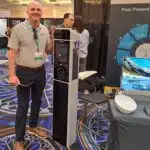
IPS, a provider of a parking ecosystem that unifies hardware, software, data and services in one platform, introduced its Multi-Space Parking Kiosk featuring a customizable touchscreen interface that accepts contactless and mobile payments, including tap-to-pay, text-to-pay, the Park Smarter app and more.
The modular unit features a customizable dashboard, does not require hardwiring and has an open interface to accept integrations. The ecosystem can combine multiple third-party solutions to support parking resource planning, management and data driven decision making. The data management system consolidates all data into a unified back-end system, offering reporting and analytics.
The unit comes in ADA compliant mounting options including pole mount, cabinet/pedestal and wall mount.
It also features solar panels for power efficiency and multi-language support.
The company receives annual security certification from a third-party qualified security assessor as recognized by the PCI Security Council for Level 1 Payment Card Industry Data Security Standard (PCI-DSS).
Just Park
Just Park, a provider of car park management and EV charging services, introduced Plate Validator, designed to help venues, stadiums and event operators speed vehicle entry without the cost and complexity of traditional LPR systems. Plate Validator enables operators to validate pre-authorized vehicles in real time using existing JustPark Prime devices, a mobile POS device and payment system for managing event and venue parking operations.
Unlike LPR systems that require fixed camera installations along with ongoing maintenance, Plate Validator uses a mobile solution, allowing operators to deploy license plate validation only when and where it is needed.
The Prime Lens camera scans and validates license plates against a pre-authorized list of vehicles associated with JustPark Passes. Operators can deploy the solution across individual lanes, lots or events, move it between locations as operational needs change, and activate it only during peak periods.
Unlike fully automated free-flow systems, Plate Validator retains attendant oversight, ensuring that vehicles not matched to a valid pass can still be processed through standard entry procedures, allowing venues to benefit from faster ingress while maintaining compliance, access control and revenue protection.
Just Park integrations include PARCS, mobile pay, reservations, meters, pay stations, sensors and LPR enforcement providers.
Metropolis Technologies Inc.
Metropolis Technologies Inc., a parking services operator and technology provider, showcased its vision for the “Recognition Economy,” highlighting how its proprietary AI and computer vision platform transforms traditional parking environments into automated, frictionless spaces.
The company demonstrated how its computer vision enabled intelligence layer replaces physical ticketing hardware. When a car approaches, the system recognizes it, opens the gate and processes the payment without tickets or credentials. The system requires customers to provide license plate, payment and phone numbers.
The recognition platform responds to presence and context in real time, continuously learning to boost accuracy, flow and personalization.
Instead of addressing friction in the physical space, the company’s AI-driven recognition changes the customer experience model. Real-time insights and predictive modeling allow teams to solve potential issues before the customer even notices.
The computer vision platform is a browser based system.
Alex Israel, chairman, co-founder, CEO and chairman at Metropolis Technologies Inc., described his vision for the Recognition Economy during a keynote presentation.
Millennium Digital Technologies LLC
Millennium Digital Technologies LLC is an international, PCI Level-1 approved provider specializing in managed network services, security and PCI compliance.
The company’s managed network solution provides drop-in “TotalPCI” compliance bundled with features to fulfill the most common technology needs. The package includes a help desk for general support, 24/7 emergency support, PC antivirus and antispyware for the revenue control server, and garage-to-garage connectivity for multi-site operations.
The support is integrated with intercom, camera and validation systems.
The managed network solution includes the NetGuard cellular network backup including unlimited monthly data, an integrated wide area network for multi-location customers, PCI-compliant two-factor remote access and direct credit processor connectivity.
MPS
MPS (Municipal Parking Services), a provider of LPR cameras and computer vision based parking enforcement solutions, highlighted its Solar SafetyStick to enforce parking restrictions. The radar technology identifies parking violations and takes photos of offenders’ vehicles and license plates. The sticks operate automatically, so an officer will not need to monitor them.
The solar-powered LPR solution enables pole-mounted automated curb enforcement for defined no-parking zones. The solution automatically sends photo evidence to parking enforcement personnel via integration with existing citation workflows. The parking operator or property manager can then execute enforcement action.
The system supports permit-based management, remote video enforcement, dial 911 capabilities from the hardware device and a cloud-based management portal.
The solution is designed for monitoring crosswalks, corners, bus stops, transit hubs, school zones, ADA ramps, drop-off zones, fire hydrants and emergency access zones.
Netpark
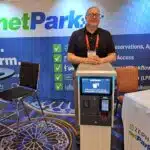
Netpark, a provider of parking workflows on a cloud platform, demonstrated a consolidated software layer for operators seeking ticketless access, mobile payments, direct reservation revenue, digital valet and centralized control across multiple facilities.
The platform unifies lanes, kiosks, LPR and payment terminals; supports configuration of rates, discounts, validations and billing cycles; and gives operators dashboards, alerts, exception handling and reporting.
The company partners with hardware OEMs to provide automated transaction kiosks, ticket machines, pay stations and parking gates..
NMI Payments
NMI Payments, a provider of embedded payment technology, presented payment processing across parking meters, mobile apps, permits and valet services.
Highlights include omnichannel parking solutions, including integration across traditional paystations, LPR, card-in/card-out systems, multi-space meters and pre-booking e-commerce.
The company also highlighted how software platforms and parking operators can manage both in-person and digital transactions without building infrastructure from scratch.
NMI Payments also announced the launch of AXIUM SmartPOS, its first all-in-one card-present terminal line built on Ingenico’s AXIUM Android platform and integrated with the NMI payment acceptance platform. The combined solution supports in-person payment methods, including chip, swipe, tap and mobile wallets. Its offline-first architecture also allows locations to continue accepting payments even when connectivity drops, with transactions syncing automatically once service is restored.
OmniQ
OmniQ, a provider of AI solutions for various industries, presented its end-to-end AI-driven vehicle recognition and smart mobility solutions. The company showed how its technology captures not just license plates, but complete vehicle insights to streamline revenue control, automation and security applications.
The company’s SeeNN AI neural network engine transforms basic license plate data into comprehensive vehicle analytics. The technology also enables real-time extraction of vehicle makes, models, colors, and issuing jurisdictions to support access control and municipal security integrations.
SEENN imitates the pattern recognition and decision making capabilities of the human brain and is the driver behind OmniQ’s SeeControl management suite which transforms vehicle data into real-time information for decision making, alerts and activity reporting.
The company also showed smart city and parking management platforms designed to improve efficiency, traffic flow and safety across commercial parking structures, airports and universities.
Orikan
Orikan, a technology provider for numerous industries in addition to parking operations, highlighted its integrated suite of parking hardware and software solutions.
The hardware line includes:
- The Metro Lite Max pay-by-plate and pay-by-space kiosks feature a touchscreen, integrated bill acceptance with optional bill change recycler or coin payment.
- The Metro Lite Touch pay-by-plate and pay-by-space kiosks support secure card transactions and bridges the gap between traditional ticket meters and touch-free technologies such as smartphone payment apps.
- The Metro Lite virtual meters mimic the appearance of traditional meter heads and use near-field communication protocols to communicate with mobile devices and accept payments through payment apps or credit cards.
The software includes:
- PinForce LPR Remote offers a gateless solution that uses cameras at entry and exit points and LPR technology to record plate numbers and allows operators to track and manage entry into and egress out of parking facilities. The central management system receives real-time parking information, which provides data to deliver insights on how the facility is used.
- UibPark Enterprise parking management is an enterprise solution that uses automation to provide granular controls to reduce administration, elevate operational efficiency and drive revenue. Modules include permit management, company management, waitlist management and integrated technology.
- UbiPark Mobile is a mobile platform that allows customers to search, navigate and access and pay for parking. For parking managers, the platform offers insights from customer data to improve customer retention and operational efficiencies.
- UbiPark Reservations booking and payment platform allows drivers to book and pay for parking in advance via an automated system. Prebooking also provides usage data which can be used to predict capacity ahead of time for events and high-use periods.
- UbiPark Agile digital parking management offers an account-based system for managers to set rules that automate every aspect of parking management, from facility access to payments to data collection.
- ExiCom360 gathers data in real time for every Orikan solution deployed in the parking ecosystem and transforms it into accessible business intelligence. Managers can view reports across a range of metrics. The system can store up to seven years of data to produce analysis and insights.
Parking Base
Parking Base, a cloud-based parking management platform, showcased its suite of parking software modules, which include:
- Valet Manager: Handles front-end valet operations and the event experience. This includes SMS messaging to provide digital ticketing and two messaging capabilities between the facility and customers.
- Permit Manager: Provides an accounting-first platform for managing parking permits. This includes a customer facing portal where customers can manage monthly permits.
- Destination Manager: Allows operators to sell commission-free, on-street parking. This allows the facility to white label its reservation platform and offer unique products.
- Access Manager: Coordinates permit-based access control. This provides one-time and multi-use QR codes that can be scanned for entry, LPR workflows or existing proxy card infrastructure.
Integrations include PARCS, enforcement, LPR cameras, EV charging, accounting, payroll, business intelligence events, ERP and residential property management.
Parklio USA
Parklio USA, a provider of parking equipment and a parking management system, introduced its cashless payment solution to the U.S. market. The solution consists of three types of terminals: entry, exit and pay on foot.
The terminals accept credit/debit cards, mobile wallets and NFC technology payments.
The company’s products also include: parking management software, a QR code based PARCS, a smartphone controlled barrier that allows for raising and lowering directly from the vehicle, an automated gate barrier, an automatic raising chain barrier, an automatic parking bollard, an automatic number plate recognition camera, parking occupancy cameras, space detection sensors and more.
Pave Mobility
Pave Mobility, provider of parking compliance platform, offers a gateless solution that enables cars to enter and exit garages utilizing LPR cameras that flag violations and trigger automated mailed notices.
The LPR camera captures the plate at the point of entry or exit and cross-references it against the garage’s permit, reservation or payment database in real time. If the plate doesn’t match an authorized credential, the system can flag the vehicle instantly in a way that does not require manual audit.
The company’s mobile app allows property managers and garage operators to register and manage parking permits digitally, report violations and receive real-time updates and notifications.
Company services include:
- Garage infrastructure preparation to ensure reliable power and network connectivity for LPR cameras.
- LPR camera installation and calibration to capture clear images of license plates.
- LPR software setup, including adjusting settings such as recognition accuracy, image storage and integration with access control or parking management software.
The company’s software integrates with Spot Hero, ParkMobile, Parkwhiz, T2 Systems, Flowbird, Cale, FlashParking, Parklync and paybyphone payment applications.
Vicky Herron introduces attendees to the parking compliance platform at the Pave Mobility exhibit.
SenSen.ai
SenSen.ai, a first-time show exhibitor and an AI and data analytics company specializing in smart city enforcement, traffic intelligence and computer vision solutions. introduced its SenForce mobile AI parking and curbside enforcement platform. The company’s environmental mapping technology allows SenForce to patrol vehicles to maintain centimeter-level position accuracy in dense urban corridors where GPS signals often fail.
The platform utilizes vehicle-mounted cameras to read entire city blocks in a single pass, automatically capturing 100-point, multi-angle evidence packages including the license plate, surrounding signs, windscreen permits and wheels for digital chalking to eliminate ticket disputes.
The system’s AI co-pilot provides a voice controlled interaction, allowing a parking enforcement officer to make voice annotations and review patrol data while keeping their hands on the wheel.
The solution feeds real-time occupancy and compliance data directly to a city’s existing digital body via open APIs. It also highlights insights from a recent partnership with Turnstone Data, a parking insights platform, to highlight untapped curbside data for resource allocation and real-time dispatch.
The company’s automated LPR identifies vehicles with more than 98% accuracy in all weather conditions, while the real-time data processing provides video and sensor data in real time, enabling immediate response. The camera takes a picture of out-of-compliance vehicles and sends it automatically to the appropriate authority.
Shark Byte Systems
Shark Byte Systems, a provider of AI-powered video analytics, leverages security cameras installed in garage entrance and exit lanes combined with image processing software to capture vehicle information for automated parking payment.
The vehicle enters the garage, the camera captures the movement to the entrance and exit lanes, the AI processes the video and the software automatically creates a virtual or printed ticket.
The camera captures all vehicle movements in and out of the parking facility, gated or non-gated, without using vehicle detection loops or other triggering hardware.
The solution captures information beyond the license plates, including make, color, state and direction. The system also differentiates between transient and monthly parkers and provides real-time inventory counts.
The system integrates with the company’s existing revenue control suite and web reservation and payment portal.
Skidata
Skidata, a provider of hardware and software for access control and revenue management, demonstrated its recently-introduced Mobility Suite as a Service (MSaaS) , a subscription-based hybrid parking management platform to give parking operators cloud-based management capabilities. These include remote monitoring, reports and security controls such as encrypted communications, cloud monitoring and incident response support.
The company also demonstrated automatic LPR based entry/exit, barrierless workflows, pay stations and third-party parking app integration through its Skidata Connect integration platform for connecting parking, access, partner and mobility systems.
In a Tech Talks session, Michael Ball, the company’s vice president of sales, said the most successful parking operations are moving beyond stand-alone tools and toward connected technology ecosystems. From access and payments to mobility platforms, customer touchpoints, and operational data, integration is what transforms individual systems into a smarter, more agile business that is better positioned to scale.
SpotGenius
SpotGenius demonstrated its Vision AI-powered parking technology and introduced its Enforcement CoPilot app, an AI-guided routing application.
Enforcement CoPilot uses computer vision data to automatically detect parking violations, prioritize high-value infractions and dynamically optimize patrol routes for enforcement teams.
The Enforcement CoPilot algorithm prioritizes active violations, taking into account data points such as proximity, violation aging, offender history, revenue potential and other customer-specific metrics to evaluate and prioritize the optimal movement of enforcement personnel to the highest priority violations.
Enforcement CoPilot can display routes on a phone or handheld device and integrates with Google Maps for turn-by-turn directions.
The team also demonstrated how its cloud platform processes real-time camera feeds to track spot-level occupancy, manage lot analytics and send instant compliance alerts.
They also highlighted a recent integration with Way.com, which provides an app that allows drivers to find, compare and reserve parking at specific venues. The integration allows operators to verify real-time compliance for incoming digital parking reservations.
Spot Parking
Spot Parking, a provider of an AI-driven, end-to-end parking management system, demonstrated its platform, which unifies detection, enforcement, payment and analytics.
The platform includes the following capabilities:
- Automated real-time LPR and auto-detection issue citations instantly.
- Live spatial maps display space-by-space monitoring to track occupancy, active session and violations the second they occur.
- A turnkey, PCI DSS-compliant checkout enables payments for hourly, daily and permit parking.
- Turn-by-turn wayfinding enables traffic to move without physical signage.
- Executive dashboards track peak occupancy, session trends and real-time revenue metrics from a unified panel.
T2 Systems
T2 Systems, a provider of parking technology, offered current information on its hardware and software products.
The company’s multi-space pay stations now ship with 7-inch digital screens. The T2 Luke II features cash, coin, bill, card and contactless payment options and is available in solar and AC-powered models. The T2 Luke Cosmo is a card-only and cashless solution that is also available in solar and AC-powered models.
The company also reported that its PARCS supports the ID Tech VP6825 PCI P2PE (Payment Card Industry Point-to-Point Encryption) validated payment solution. The integration delivers end-to-end encryption, faster processing speeds and mobile payment options like Google Pay and Apple Pay, enabling parking operators to process transactions more securely and efficiently while simplifying PCI compliance and protecting future revenue systems. PCI P2PE encrypts sensitive credit card data from the point of payment until it is decrypted by the service provider, reducing the scope of a business’s PCI compliance. The new solution supports contactless, chip and magstripe payments.
The company also announced its UPsafety Permit and Enforcement platform supports Apple Pay, Google Pay and Link, expanding payment options including one-tap checkout.
TagMaster North America
TagMaster North America, a supplier of data solutions and sensor systems for smart cities within traffic and rail, introduced its AI-powered VeriFlow mobile LPR, a cloud-native mobile LPR enforcement and operations platform.
The product unifies mobile LPR, real-time field visibility and device monitoring, operational analytics and partner integrations into one SaaS platform.
Features include:
- In-vehicle dashboard for patrol officers.
- Mobile LPR reads, hit/match alerts, violations and citation workflows.
- Configurable policy creation, user-defined tariffs/rates, permits and special events.
- Real-time map, route and patrol visibility.
- Evidence-aware hit review and citation support.
- Fleet, device and system health monitoring.
- Patrol coverage and enforcement analytics.
- Revenue assurance, payment compliance and tariff visibility.
- Partner ready PARCS, payment, permitting, parking and revenue control system integrations.
Tapco
Tapco (Traffic Control and Parking Control Co. Inc.), a manufacturer, distributor and service provider of roadway safety products, highlighted its parking counting systems.
The counting systems track available parking spots with magnetometer, lidar, camera or single-space sensors. The systems offer customer wayfinding with real-time parking availability displayed on LED signage and the parking app.
The battery-operated magnetometers use magnetic sensors to monitor activity at ingress and egress points for both indoor and outdoor parking lots. The sensors gather parking data and share it in real-time via LED signage and mobile and web options.
The laser-based lidar systems use directional logic for accuracy at entry and exit points.
The AI-powered camera visually tracks vehicles entering and exiting, while a variable message sign displays real-time parking spaces with customizable LED signage.
The company’s cloud-based management offers insights for lot owners and managers.
The company recently introduced its Mobile RRFB Crosswalk — a portable addition to its Smart Crosswalk. Mobile RRFB Crosswalk allows agencies to temporarily establish a visible crossing at any mid-block or unmarked location. The cart-based system can be relocated as needed to adapt to changing conditions and traffic patterns.
The system includes a pair of portable carts that work together to create a recognizable pedestrian crossing. Each cart is equipped with a smart controller, rectangular rapid flashing beacons (RRFBs), push button, solar panel, battery and a static pedestrian sign with a down arrow.
Tapco co-exhibited with a sister company, Parking Logix, a parking solutions company Tapco acquired in 2025.
TIBA Parking Systems
TIBA Parking Systems, a provider of PARCS technology, highlighted its SPARK cloud-based parking management platform for centralized operational control and extended capabilities via integration partners.
The company positioned the display around a spectrum of deployments—from conventional gated facilities to ticketless, AI-enabled parking operations.
Core SPARK functions include:
- Command center: Real-time visibility and control.
- User and access management: Manage access remotely.
- Monthly accounts: Recurring billing and Parker account management handled automatically.
- Validations and passes: e-validations, e-coupons, physical stickers or phone based entry.
- Reports and analytics: Built-in reports on occupancy, revenue, validations and daily operations.
- Lot configuration tools: Adjust rates, plan for events and update access groups in seconds.
Transaction Network Services
Transaction Network Services, a provider of communication networks for payments, financial markets and telecommunications, announced its partnership with Unattended Card Payments, which specializes in EMV-compliant hardware and payment solutions for attended and unattended card payment terminals.
Through the collaboration, UCP customers will gain access to TNS’s payment orchestration platform, unattended payments expertise and terminal certifications.
TNS also demonstrated its recently introduced TNSPay SmartRoute, a transaction routing solution that lets locations, acquirers and processors balance performance, cost and uptime across data centers, hosts and multiple processors. With a multi-tenant portal, teams can set and update routing rules in real time, automate failover and gain deep operational visibility through visual network mapping and full audit trails.
TNSPay SmartRoute benefits include:
- Customer-configurable routing: Define dynamic business rules to route transactions based on performance, geography cost or maintenance windows without waiting for third-party change tickets.
- Automate failover and continuity: Trigger instant, policy-driven failover across data centers and processors to maintain uninterrupted processing during incidents.
- Operational visibility and governance: Role-based access, MFA, visual network maps and end-to-end audit trails give teams confidence and traceability.
- Secure infrastructure: Delivered on TNS’ PCI DSS Level 1 environment with 24x7x365 multi-country support from TNS Global Service Support Centers.
Umojo
Umojo highlighted its suite of mobility, automation and AI-driven security tools for managing parking in both private and public spaces. The company’s platform integrates camera AI with omnichannel contact center operations to optimize off-street and on-street parking.
The company’s NexPark cloud-based remote management system enables garage operators to manage assets and streamline facilities across multiple locations without needing physical, 24/7 on-site staffing. Instead of forcing operators to “rip and replace” legacy equipment, NexPark acts as an overarching software layer that integrates with existing PARCS, intercoms, and security cameras.
While NexPark focuses on private garage automation, the company’s NexCity focuses on the open curb, solving urban mobility challenges like traffic congestion, loading zone chaos, dynamic pricing and safety compliance.
The solution unifies disparate city data silos, including localized parking meters, mobile payment apps and enforcement systems into a single web dashboard. Built-in algorithms weigh safety, equity and efficiency metrics across different streets and automatically recommend adjustments to increase local parking revenue or lower traffic risk.
The company’s NexShield solution offers an AI-powered security and surveillance solution utilizing proactive detection, active strobe lights and integrated speakers to mitigate risks before they escalate.
Way.com
Way.com, a provider of an app that allows drivers to find, compare and reserve parking at specific venues, demonstrated its services designed to help parking operators gain customers.
The app helps drivers find parking, car washes, gas cashback offers, auto repair and auto insurance. Users can also track mileage, get roadside assistance, store rewards in a wallet and find EV charging stations,
Operators can list parking on the app and accept reservations, control rates and availability, and see bookings in real time.
Media Gallery
-

- Steve Gordon, Yahaira Perez and Aileen Aquino describe app-based benefits for drivers and parking operators at the Way exhibit.

-
- Attendees converge at the NexCity video demonstration at the Umojo exhibit.

-
- Ken Harris and Ivan Salgado display the TNSPay SmartRoute at the Transaction Network Services exhibit.

-
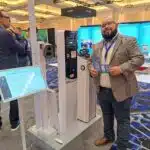
- Rudy Alvarado highlights QR coded valet tags at the TIBA Parking Systems exhibit.
-
- Jonathan Roebertson and Margie Anderson discuss counting technology at the Tapco exhibit.

-
- Amanda Duffy introduces the AI-powered VeriFlow mobile LPR platform at the TagMaster exhibit.

-
- Faith Martin and Brittani Wynn educate attendees about parking hardware and software at the T2 Systems exhibit.

-
- Cooper Young explains the unified parking management system at the Spot Parking exhibit.

-
- Kevin Bopp shows how SpotGenius technology processes real-time camera feeds to track spot-level occupancy.

-
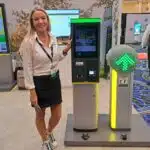
- Kerry Loomis highlights a parking exit gate at the Skidata exhibit.
-
- Michael Sharkey and Genesis Garcia introduce AI-powered video analytics for automated parking payment at the Shark Byte Systems exhibit.

-
- Anil Merchant introduces the mobile AI parking and curbside enforcement platform at the Sensen.ai exhibit.

-
- Vicky Herron introduces attendees to the parking compliance platform at the Pave Mobility exhibit.

-
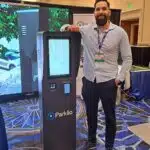
- Dario Bora introduces a cashless payment terminal at the Parklio exhibit.
-
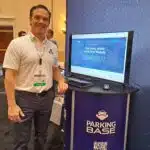
- Chris Perry presents a parking management platform at the Parking Base exhibit.
-
- John Whiteman explains AI-driven vehicle recognition and smart mobility solutions at the OmniQ exhibit.

-
- Michael Kavur presents parking hardware and software solutions at the Orikan exhibit.

-
- Darrell Dirks, Steph Levine, Dan Cambridge Darrell Dirks, Steph Levine, Dan Cambridge and Mollie Kerrigan introduce attendees to payment processing for parking locations at the NMI Payments exhibit.

-
- Mike Rector discusses the parking management platform at the Netpark exhibit.
-
- David Stansberry describes the Solar SafetyStick at the MPS exhibit.

-
- Matt Czarnecki educates attendees about managed network solutions at the Millennium Digital Technologies LLC exhibit.

-
- Bill Burns discusses the Recognition Economy at the Metropolis Technologies Inc. exhibit.

-
- Drew Lee introduces the mobile LPR solution at the Just Park exhibit.

-
- Brendan Egan introduces the multi-space parking kiosk at the IPS exhibit.
-
- Eli Thomas introduces a parking payment kiosk at the Inugo exhibit.

-
- Donny Harrison and Sim Bielak present a cash recycler at the combined Innovative Technology Ltd./NXT Technology Partners exhibit.